
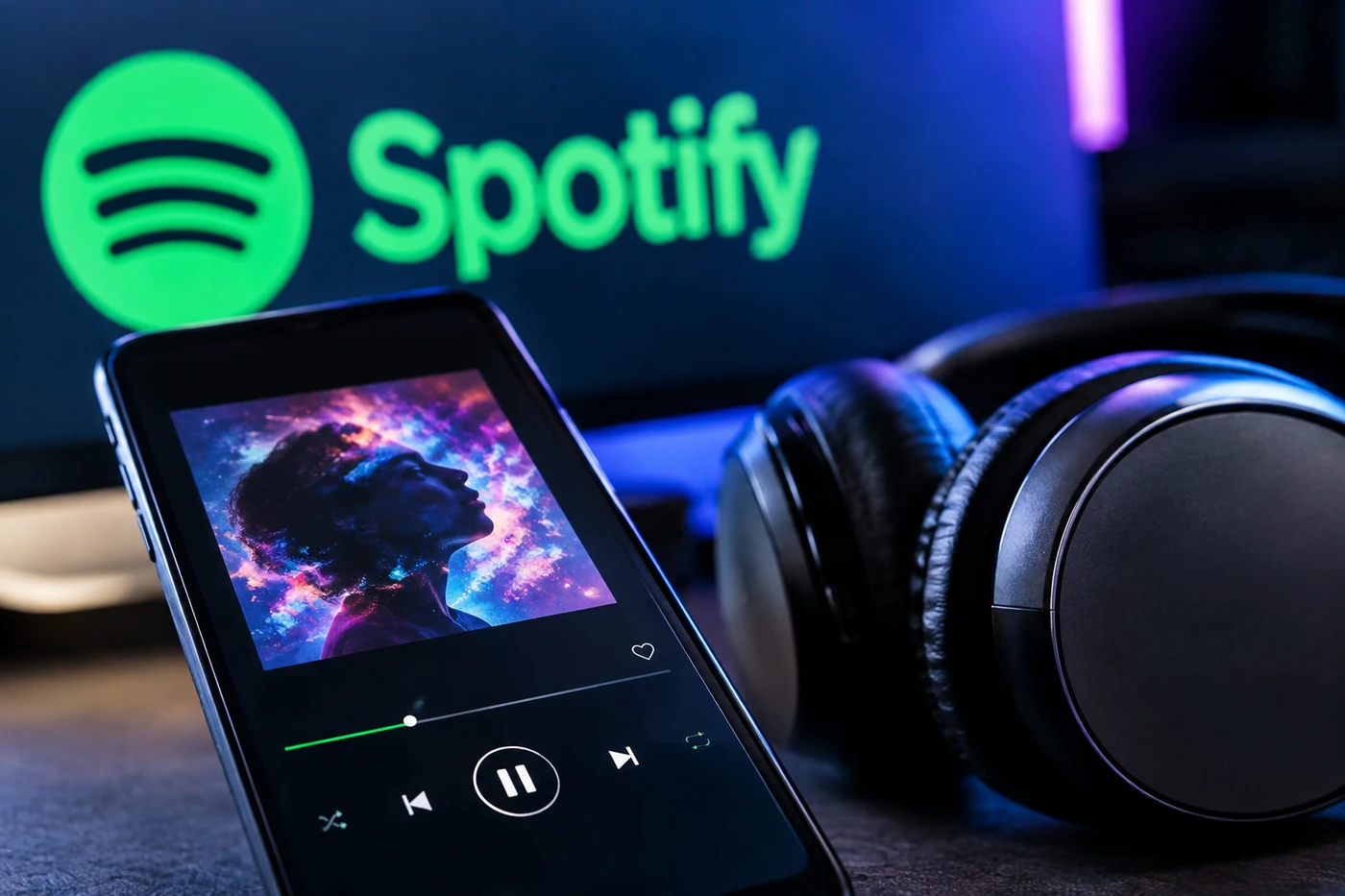
AI-Assisted Music Remixes: Spotify's Merlin Deal Explained
Spotify's planned AI-assisted music remixes tool, licensed through Merlin, will let Premium subscribers reshape participating tracks while raising crucial questions about artist compensation and control.
Spotify doesn't just want fans to stream your track. It wants them to take a wrench to it.
That sounds either smart or mildly horrifying. Both can be true.
The remix button
On August 4, Spotify signed an agreement with Merlin for an upcoming tool that lets paying users create AI-assisted covers and remixes from participating music. Artists represented through Merlin's member labels can choose whether their work joins the experiment. Spotify says they'll receive credit and compensation, with fan creations pointing listeners toward the original track. The announcement is here1. (newsroom.spotify.com1)
This matters because Merlin represents independent labels and distributors responsible for roughly 15% of the global recorded-music market. Spotify already made a similar deal with Universal Music Group on May 21. The tool will be sold as an extra purchase for Premium subscribers. No launch date or pricing has been announced as of August 5.
Spotify isn't inventing licensed fan remixing. Apps including Hook and MashApp have already worked with cleared catalogs. Suno and Udio took the wilder route: generate nearly anything, then argue about the rights later. Spotify's version is the fenced garden. Permission first, remix second.
The useful question isn't "Is AI good?" That debate has eaten enough afternoons. Ask who controls the input, who gets paid and where the audience goes next.
Attention gets editable
The scale makes this more than a novelty button. Spotify finished Q2 with 300 million paying subscribers and 777 million monthly users. Revenue reached €4.8 billion, up 14% year over year. Its earnings update2 also says operating income hit €655 million. (newsroom.spotify.com2)
Management says more than a quarter of active users have already touched newer AI products such as Talk to Spotify, Personal Podcasts, Prompted Playlists or Studio. In plain English: Spotify is slowly changing from a library into a creation machine.
For musicians, a fan remix could become distribution you didn't have to manufacture. Or it could flood discovery surfaces with weaker versions of your work. The missing detail is the important one: how revenue gets divided between the artist, songwriter, rights owner and platform.
Podcast creators should watch too. Personal Podcasts can generate private audio around a listener's day. That content doesn't need to become famous. It only needs to steal one commute from your show.
Your move
Check your contracts. If you're signed or distributed through a Merlin member, find out who controls participation. "Opt-in" means little if you don't know who gets the button.
Don't approve blind. Ask for payout rules, reporting, voice protections and removal options. Cute demo videos aren't accounting documents.
Build recognisable edges. Strong stories, visual identity and direct fan channels become more valuable when anybody can generate another version of the audio. Make sure the remix sends people somewhere you own - not merely back into Spotify's endless hallway.
- 1newsroom.spotify.comThe announcement is here
- 2newsroom.spotify.comearnings update
Discussion
Join the discussion — share what's working for your channel.