
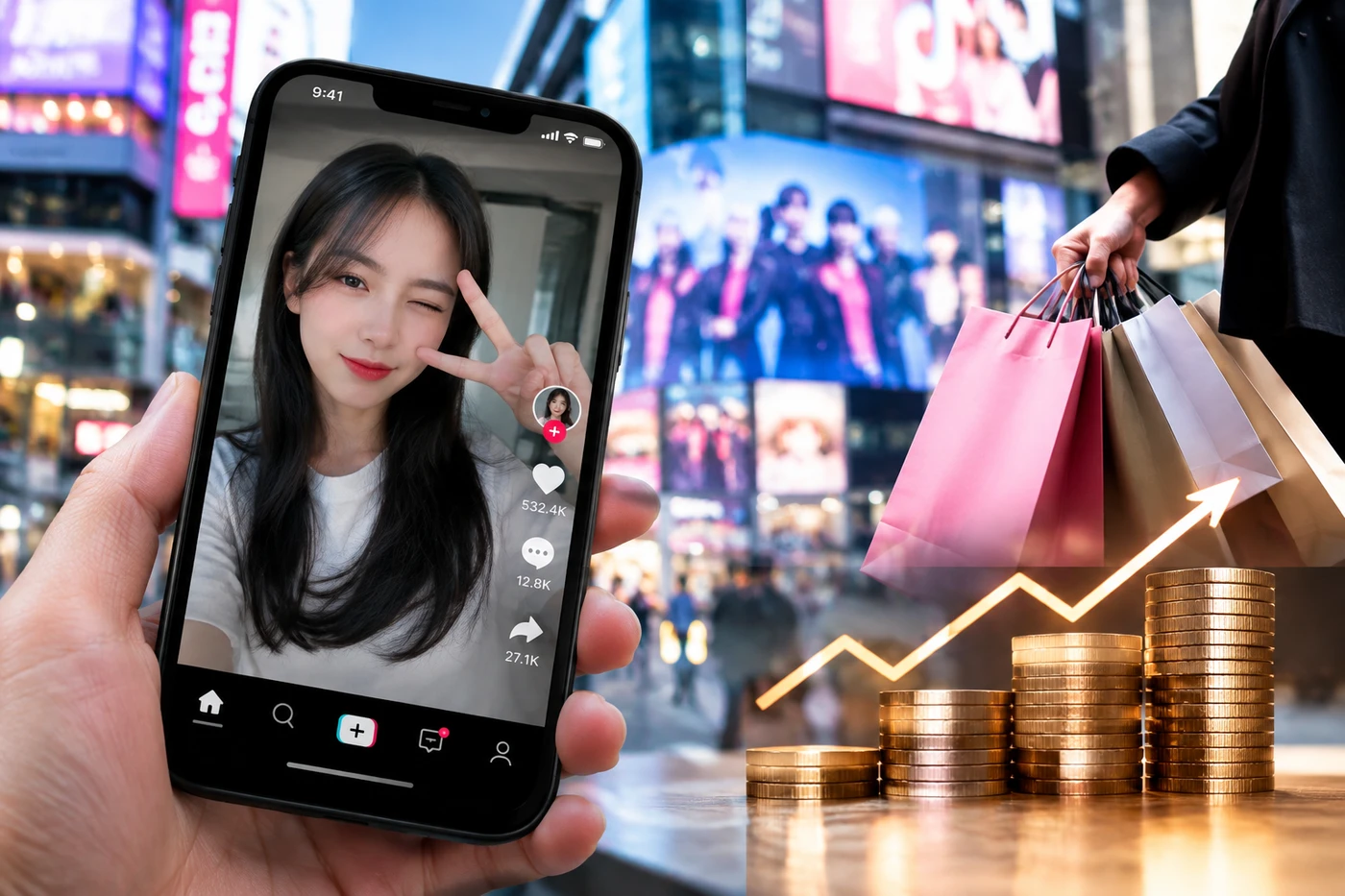
K-Culture Economic Impact: How TikTok Turns Views Into Spending
K-culture economic impact is accelerating as TikTok content drives spending across beauty, tourism, food and music. The data reveals how creators can turn audience curiosity into measurable commercial action.
A skincare clip becomes a checkout. A street-food video becomes a flight search. That dance tutorial? Maybe the first step toward a Seoul itinerary.
The interesting bit isn't that Korean culture travels well. We knew that. It's how quickly creators now turn curiosity into spending.
The big number
TikTok Korea and consulting firm Kearney estimate that K-culture activity connected to TikTok will create 31.37 trillion won, roughly $23.5 billion, in economic impact during 2026. They expect that to reach 40.64 trillion won by 2030.
The study surveyed 3,300 people aged 16 to 49 across ten countries, including the United States, Brazil, Japan, Indonesia and the UK. It covered music, entertainment, beauty, food, fashion and tourism.
According to TikTok's published findings1, 88.7% of respondents said the app helps them discover K-culture. More importantly, 55.7% said they'd spent money after consuming related content.
Small asterisk: TikTok commissioned the research and is measuring TikTok's own influence. Treat the giant forecast as an estimate, not a suitcase containing $30 billion in cash.
Views are applause. Purchases are evidence. Creators need to know which one they're actually generating.
Culture leaves the screen
K-beauty is expected to deliver the largest direct impact by 2030. That tracks with the boring, useful real-world data: South Korean cosmetics exports reached a record $11.43 billion in 2025, up 12.3%, with the US becoming the largest market at $2.2 billion, according to government figures2.
Tourism is the faster mover. TikTok and Kearney forecast 44% growth in its direct impact between 2026 and 2030. Suddenly, the creator filming a quiet noodle shop isn't producing "local lifestyle content." They're sitting near the top of a travel funnel. Fancy title. Same phone.
TikToker Jittomeok, who has 1.1 million followers, said her Korean food livestreams helped open doors to overseas advertising work and beauty-product sales in Thailand. That's the opportunity: one topic can travel into several industries.
TikTok doesn't own this wave, either. YouTube remains the deep-library machine, while Spotify says K-pop generated more than 61 billion streams outside South Korea3 during 2025. Short-form sparks the itch. Search, streaming and long-form help people scratch it.
Your move
Stop covering only the obvious headline. If you make K-pop content, test the fashion, food, language or locations surrounding it. Audience interest rarely respects your tidy content categories.
Build for the next action. Name the product. Add the location. Explain where to buy, book or learn more. Don't make viewers conduct an archaeological dig through your comments.
Then watch for purchase questions, not merely likes. "Where can I get this?" is a stronger creative signal than another fire emoji. Follow that question. There's probably a series hiding behind it.
- 1newsroom.tiktok.comTikTok's published findings
- 2korea.netgovernment figures
- 3newsroom.spotify.com61 billion streams outside South Korea
Discussion
Join the discussion — share what's working for your channel.