
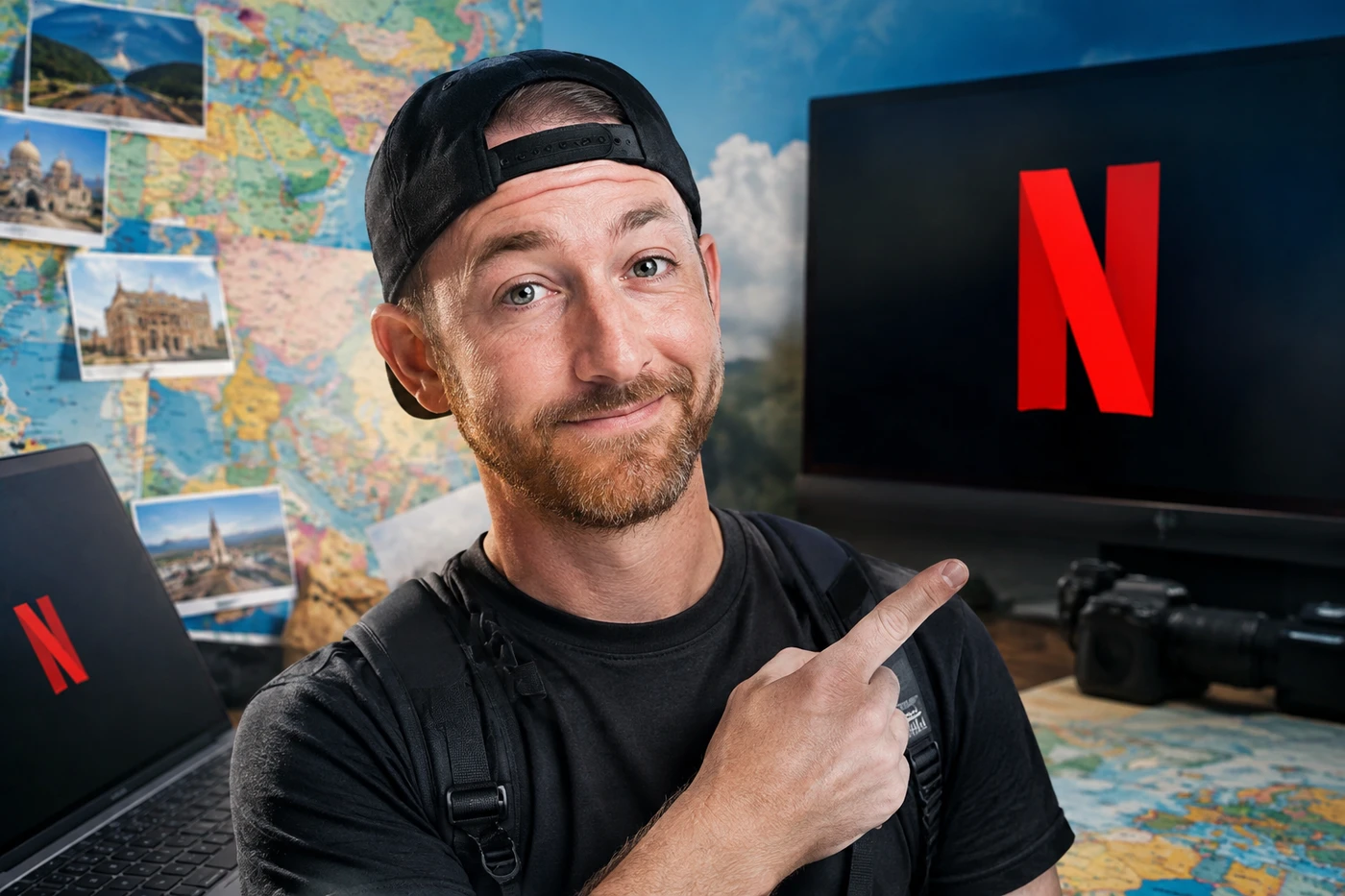
Creator Library Licensing: Drew Binsky's Netflix Deal Explained
Creator library licensing is changing how established channels reach television audiences, as Drew Binsky's non-exclusive Netflix deal creates new revenue and distribution opportunities without leaving YouTube.
The next platform fight won't be over a clever new feature. It'll be over creators who already know how to hold an audience.
Drew Binsky is the latest name walking into the middle of it. Not leaving YouTube. Not "graduating" to Hollywood. Just making the same work travel farther. Sensible, really.
A second screen
Starting September 19, Netflix is set to carry a selection of Binsky's travel videos. New episodes will also arrive on Netflix on the same day they're published to YouTube.
The deal is non-exclusive, so his channel stays put. That matters. Binsky built his business by documenting trips across all 197 countries, collecting billions of views and an audience spread across several platforms. You can see the scale of that operation on his official site1.
Netflix isn't asking viewers to abandon YouTube. It's buying access to proven videos for people who open Netflix first, especially on the television.
And Netflix now has evidence that repackaged creator libraries can work. During the first half of 2026, Ms. Rachel's content generated 69 million views there. Mark Rober's CrunchLabs collected 36 million, while Salish and Jordan Matter reached 29 million, according to Netflix's viewing report2.
The real prize
This isn't about Netflix suddenly discovering travel vlogs. It's about stealing a little more living-room time from YouTube without building every show from scratch.
For creators, the interesting bit is the economics. One production can now earn YouTube ads, sponsorship revenue and a separate licensing fee. No second shoot. No desperate vertical edit with captions bouncing around like a karaoke machine.
The valuable asset isn't your follower count. It's a library that still makes sense six months later.
YouTube has noticed. In August, it reportedly began discussing million-dollar incentives, production funding and brand opportunities with large channels willing to keep certain work exclusive. The details vary, but the message is fairly loud3: your upload calendar has become negotiating leverage.
Small creators won't receive a Netflix email tomorrow. Calm down. The wider shift still reaches you, though. Platforms increasingly want complete, television-friendly formats - not only viral clips.
Build for options
First, keep ownership of your raw footage, masters, music rights and artwork tidy. A licensing offer becomes useless surprisingly fast when nobody knows who owns the background track.
Second, create repeatable series with clear titles and episodes that can survive outside your channel feed. Think less "random upload," more shelf-ready collection.
Finally, don't trade your main audience for a shiny logo unless the money covers the risk. Extra distribution is lovely. Dependency wearing a Netflix badge is still dependency.
- 1drewbinsky.comhis official site
- 2about.netflix.comNetflix's viewing report
- 3news.bloomberglaw.comthe message is fairly loud
Discussion
Join the discussion — share what's working for your channel.