
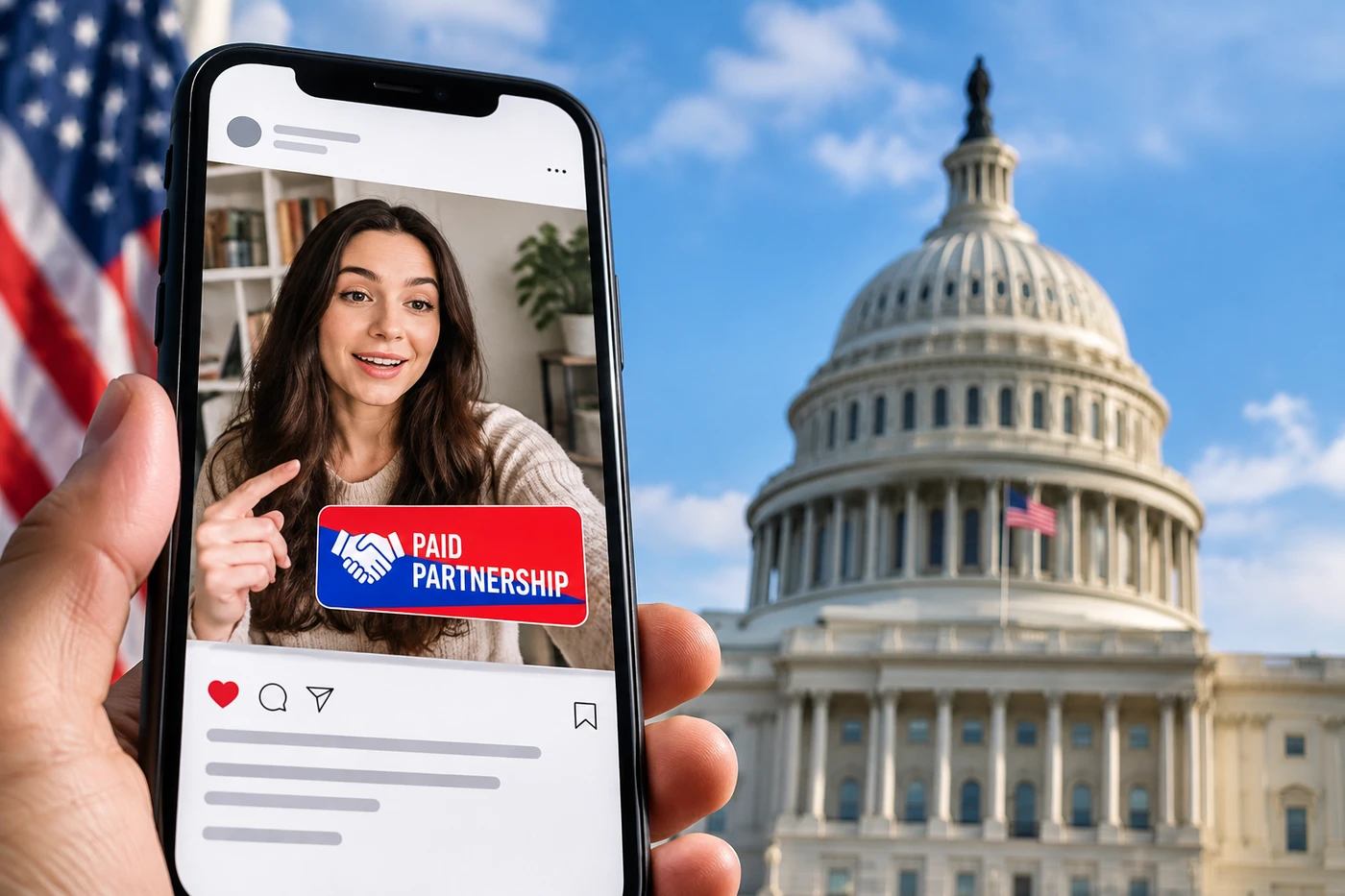
Paid Political Influencer Disclosures: What the PAID Act Could Change
Paid political influencer disclosures may soon face clearer federal rules. The PAID Act would require creators to label campaign payments, while practical steps can protect audience trust now.
A skincare sponsor needs an ad disclosure. A campaign paying you to influence an election? Federal rules get strangely foggy.
That gap may not survive much longer. And honestly, creators shouldn't wait for Congress to clean it up.
Congress found the missing label
Senator Adam Schiff introduced the Promoting Authenticity with Influencer Disclaimer Act, mercifully shortened to the PAID Act, on July 27. Representative Mark Takano filed the House version on June 2.
The proposal1 would change federal election law so anyone paid by a candidate or political committee must clearly say so in the post. As of August 13, neither chamber has voted on it. It's a bill, not a rule. Yet.
The legal hole is pretty simple. The FTC handles commercial endorsements. Political speech generally sits outside that lane. The FEC requires funding labels on many political communications, but ordinary posts published to a creator's existing audience can slip through because internet content is treated differently from paid placement.
California and Texas already require disclosures in certain paid political posts. Enforcement is another story. California's watchdog has been investigating creator work connected to the 2026 governor's race, while lawmakers have considered fines of up to $5,000 per violation. The campaign around Tom Steyer2, who spent more than $215 million of his own money, put the issue under a very bright lamp.
Your trust is the product
This isn't politicians suddenly discovering hashtags. It's campaigns discovering that creator trust can be rented more cheaply than television attention.
Twenty-one percent of American adults regularly get news from online personalities, according to Pew Research Center3. Among people aged 18 to 29, it's 38%. Much of that news isn't deliberately searched for. It simply lands in the feed between a joke and a gym video.
Your audience can forgive an opinion. Hidden money feels more like a setup.
Platform rules won't reliably save you. TikTok bans compensated political promotion, including paid creator content. YouTube has its paid-promotion switch, but clicking a platform box may not satisfy every legal requirement. Different platform, state and federal rules can collide inside one thirty-second clip. Lovely.
Don't wait for the vote
Label the money plainly
Put the disclosure in the video, caption and opening lines. Name who paid. Don't bury it after twelve hashtags or rely on "partner" when you mean "the campaign paid me."
Keep the paperwork
Save the contract, brief, invoices, approvals and final post. Require the buyer to identify whether it's a campaign, PAC, nonprofit or agency acting for someone else.
Protect the audience first
Only endorse candidates you'd support without the check. Then disclose the check anyway. Political deals may pay once. Credibility pays for years.
- 1schiff.senate.govproposal
- 2apnews.comcampaign around Tom Steyer
- 3pewresearch.orgPew Research Center
Discussion
Join the discussion — share what's working for your channel.
No comments yet — say what's working for your channel.