
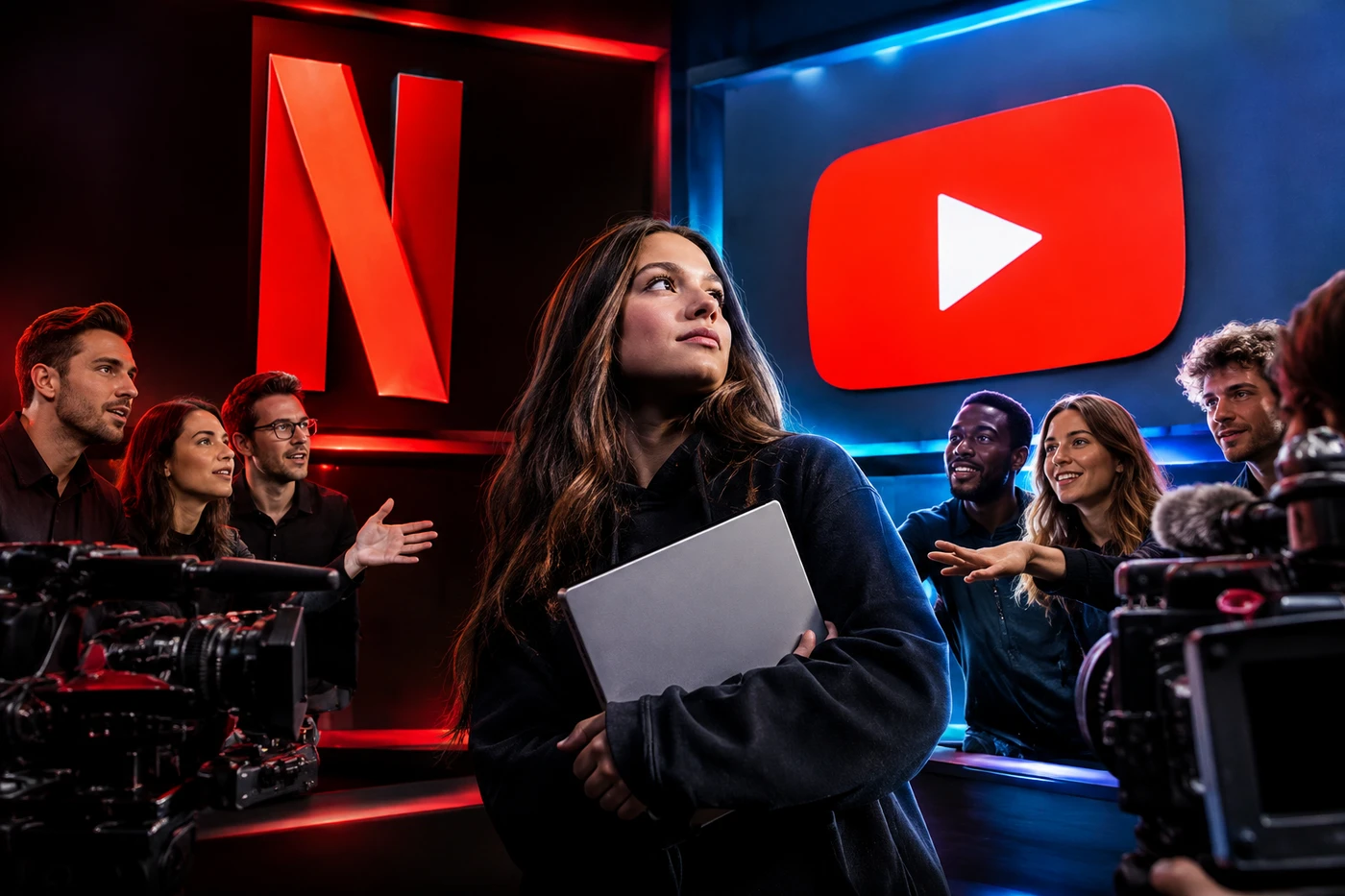
Creator Platform Competition: Netflix and YouTube Fight for Talent
Creator platform competition between Netflix and YouTube is exposing a harder challenge than signing talent: preserving audience habits, publishing independence and the feedback loops that make creators valuable.
Netflix is shopping for creators. YouTube is reportedly waving millions around to stop them leaving. Lovely little bidding war.
One awkward detail: viewers still appear far more attached to YouTube than YouTube viewers are to Netflix.
The numbers
According to Apptopia's U.S. mobile panel1, 92% of Netflix users also used YouTube in August. Flip it around and only 16% of YouTube users used Netflix. Netflix's mobile churn was also running 10.4% higher than a year earlier. (digitalinformationworld.com1)
That doesn't prove Netflix's creator push caused anything. It's app data, not television viewing, and people can happily use both services. Netflix engagement has actually improved among some older users. Still, the direction isn't exactly comforting.
Netflix has been stuffing more internet-shaped entertainment into its app: clips, video podcasts and established creator libraries. In July, it added eight episodes from the Stokes Twins2, whose audience runs into the hundreds of millions. Salish and Jordan Matter signed a broader partnership earlier in the year. (netflix.com2)
YouTube noticed. On August 19, Bloomberg reported that the platform had discussed seven-figure offers involving production funding, temporary exclusivity and slices of major brand deals. No agreements had been finalized at that point. Creator reactions ranged from concerns about locked distribution to, naturally, jokes asking where their own million-dollar cheque was hiding. (news.bloomberglaw.com3)
Why this matters
This isn't really a Netflix-versus-YouTube story. It's a reminder that content can travel more easily than audience habits.
YouTube combines search, recommendations, comments, Shorts, subscriptions and television viewing in one messy machine. Shorts alone averages 200 billion daily views, while YouTube says it has paid creators, artists and media companies more than $100 billion over four years. That's an ecosystem, not simply another shelf for shows. (blog.youtube4)
Platforms rent attention. Creators build the reason people return. Don't confuse the two.Netflix can pay for proven formats. What it can't instantly copy is the feedback loop that helped those formats become proven.
And another competitor is nibbling at the phone screen. America's seven largest microdrama apps stayed above 11 million monthly downloads in June and generated more than $17 million in in-app purchases. They aren't crushing Netflix yet. They are teaching viewers to expect a cliffhanger every 90 seconds. Different problem. Same finite day. (apptopia.com5)
Your move
Protect your home base. A licensing cheque is useful. Losing your publishing rhythm, audience data or sponsor flexibility can cost considerably more. Read the exclusivity window twice. Then let a lawyer read it once.
Package, don't relocate. Build versions of your work for other platforms while keeping the community engine alive. Archive deals, compilations and adapted formats beat handing someone the keys to your entire operation.
Watch behaviour, not headlines. Track returning viewers, direct traffic and email sign-ups. The biggest platform offer means little if your audience doesn't develop a habit around you.
- 1digitalinformationworld.comApptopia's U.S. mobile panel
- 2netflix.comStokes Twins
- 3news.bloomberglaw.com
- 4blog.youtube
- 5apptopia.com
Discussion
Join the discussion — share what's working for your channel.