
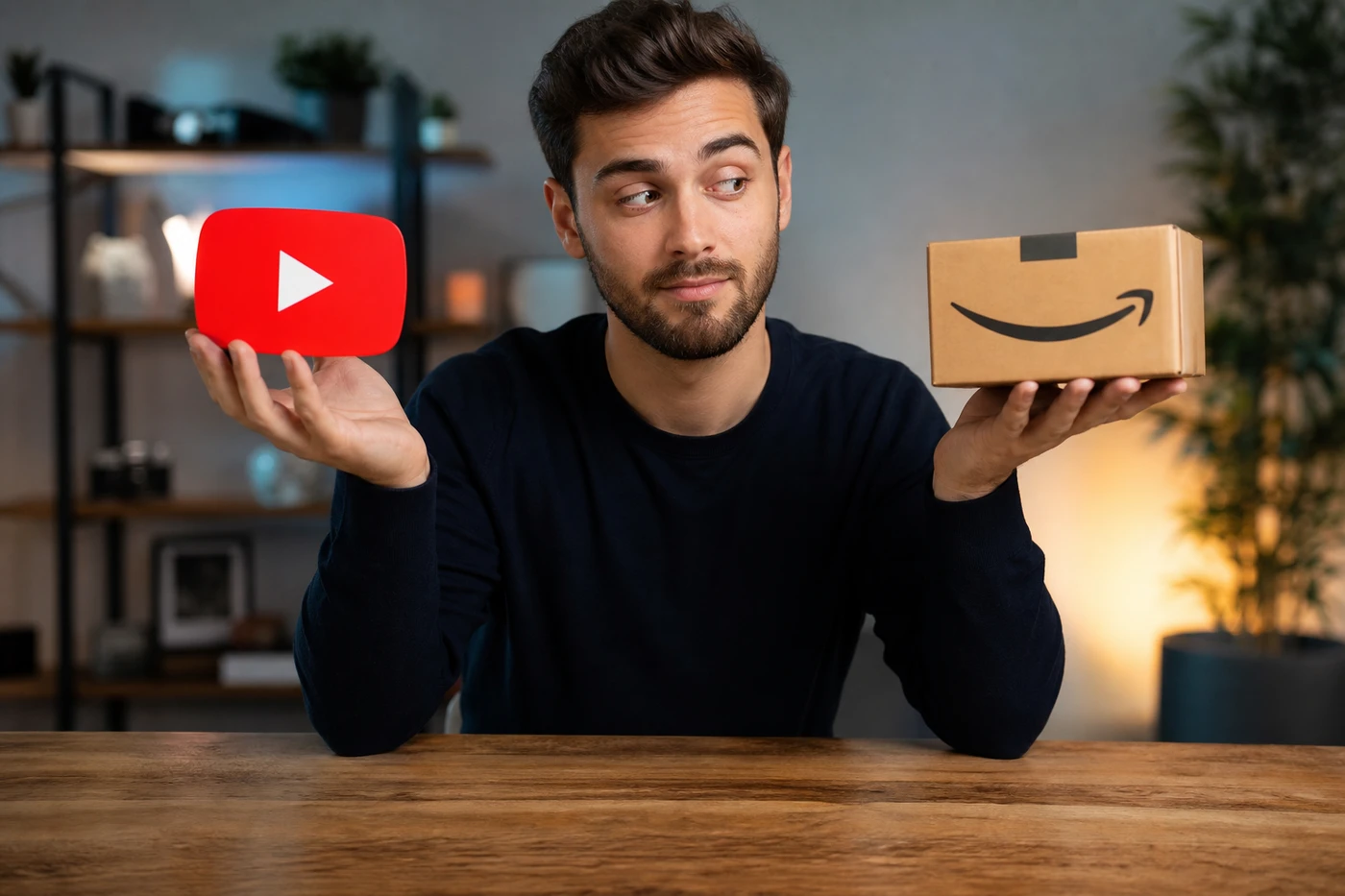
YouTube Amazon Shopping Tags: What Creators Get and What to Watch
YouTube Amazon shopping tags are live for eligible U.S. creators, letting you tag Amazon products in videos, Shorts, and lives and get paid via AdSense. Here's how it works, limits, and next steps.
For years, "affiliate income" on YouTube meant the same unglamorous ritual: cram links into the description, pray people scroll, then watch half your viewers bounce before checkout.
That era's getting replaced by something way more dangerous to your attention strategy: buying... without leaving the video.
Creators: we begged for fewer steps. Platforms heard "more impulse purchases." Both can be true.What happened
YouTube added Amazon to the YouTube Shopping Affiliate Program for eligible creators in the U.S. If you're in the YouTube Partner Program and you have an active Amazon Influencer or Amazon Associates account in good standing, you can tag Amazon products directly inside videos, Shorts, and livestreams.
When viewers buy a tagged product, you earn Amazon affiliate commission. Those earnings run through YouTube's system and get paid out via AdSense (together with other YouTube earnings). Don't expect "instant." There's a monthly lock, and payouts can land a couple AdSense cycles later. Returns can claw back commission from a future payout.
One catch that matters: you can't tag the entire Amazon universe. Amazon supplies YouTube with a curated catalog of popular/trending items. If what you want isn't available, you can request additions through YouTube Creator Support. No guarantees.
YouTube's also waving around early performance data: in at least one internal experiment, product tags got meaningfully more product clicks than stuffing links in descriptions. Translation: the UI placement is doing the work, not your copywriting.
Why creators should care
Distribution: YouTube is steadily turning "watching" into "watching + shopping," including on TV screens. That changes what the algorithm can reward. A clean product-tagged tutorial or review isn't just content anymore - it's a transaction funnel with watch time attached.
Monetization: Amazon commissions are usually low single-digits, so this won't magically replace ads for most channels. But it can stack nicely on the exact videos you already make: gear rundowns, studio tours, desk setups, kitchen tools, parenting basics, "things I use every day." Evergreen stuff. The kind that sells while you sleep.
Workflow: The boring win is operational. No more link chaos across old uploads, pinned comments, and "which storefront did I use back then?" If tags become your default, your catalog becomes part of your publishing system, not a side quest.
The risk: a curated catalog means everyone may end up pushing the same products. Same thumbnails. Same "top 7" lists. Same race to the bottom. If you're not careful, you'll turn your channel into a slightly higher-resolution infomercial... with better lighting and worse margins.
If your content starts sounding like a product page, people will treat it like one: skim, compare, leave.What to do next
-
Audit your back catalog like a retailer, not an artist. Find the 20 videos that already generate buyer-intent comments ("link?", "what model?", "where'd you get that?"). Start there. Tag those products first.
-
Build "owned" product moments inside the video. Don't just tag a thing - create a clean 10-20 second segment where the product is clearly shown, named, and used. The tag is the button. Your job is making someone want to press it.
-
Plan for payout lag and returns. Treat this like delayed revenue with chargebacks. Don't spend "future commissions" in your head. Track it monthly and keep a buffer, especially if you're going to lean harder into shopping content.
-
Keep a diversification escape hatch. If the curated catalog doesn't include your best-fit items, don't contort your content to match what's taggable. Keep a parallel system (your own store, other affiliate partners, sponsor packages) so you're not boxed in by what's "available in the picker" this week.
Discussion
Join the discussion - share what's working for your channel.