
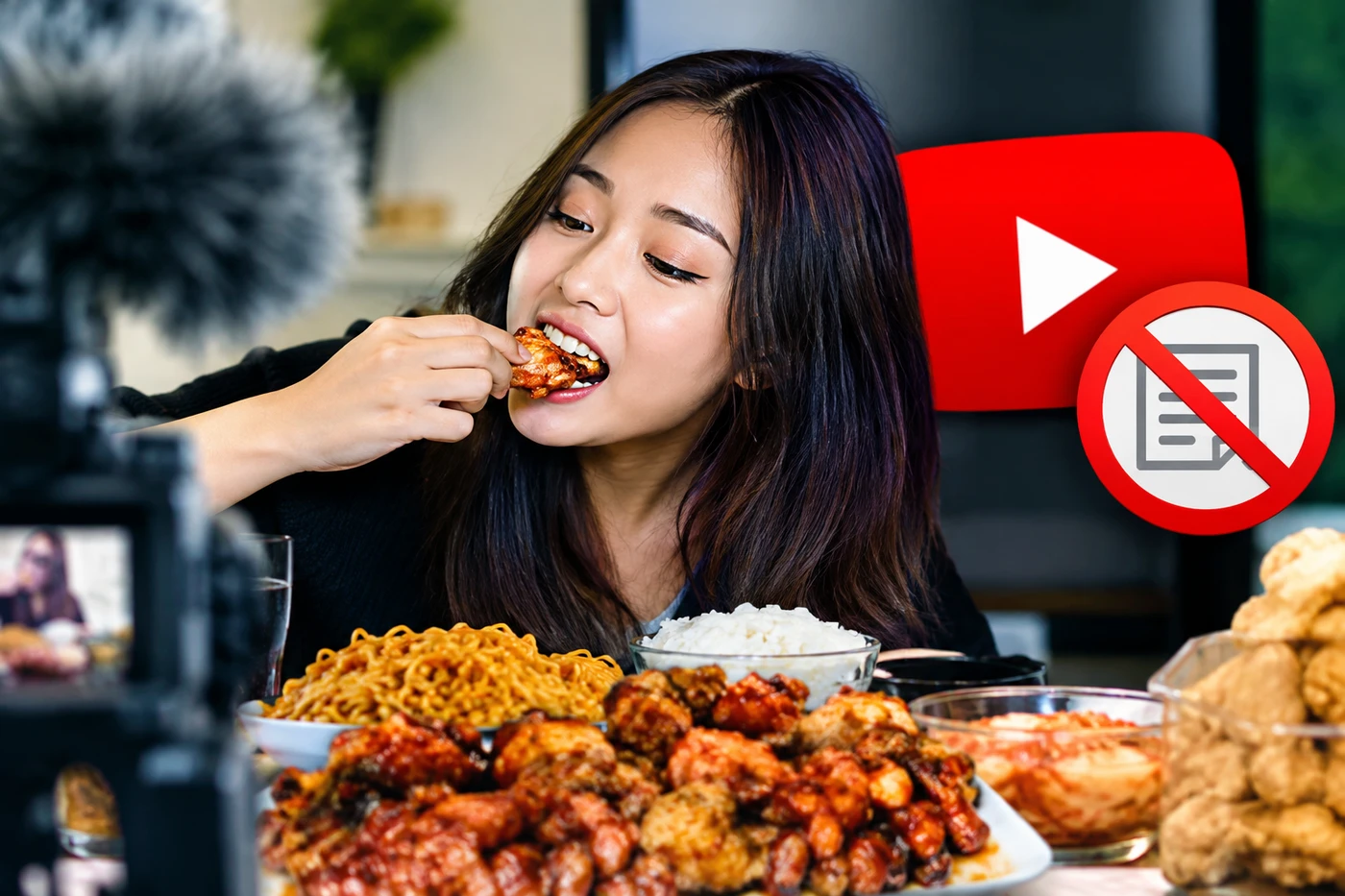
YouTube Eating Disorder Policies: Why Mukbang Archives Are at Risk
YouTube eating disorder policies are affecting mukbang and diet creators in South Korea. This guide explains why old uploads remain risky and how to audit titles, thumbnails, footage and monetization exposure.
Your next upload may be perfectly harmless. The 300 old videos quietly sitting behind it? Different story.
YouTube's tougher handling of eating-disorder content is hitting mukbang creators, but the blast radius is wider: diet diaries, transformation videos, calorie challenges and weight-loss "journeys" are all exposed.
The rules aren't new
YouTube tightened its eating-disorder policies in 2023. What's changed is the enforcement creators are now seeing, particularly in South Korea.
Diet creator DietJo, with roughly 440,000 subscribers, said her channel lost monetization and paused uploads. Another creator, Miso, deleted 339 of 667 videos after receiving a violation notice and appealing. Major mukbang creator Tzuyang, who has around 13.5 million subscribers, has talked about eating more moderately, although there's no confirmation that her channel was directly penalized.
This isn't a blanket mukbang ban. Ordinary meals, restaurant videos and food reviews aren't automatically in trouble. The risk rises when the presentation resembles behavior viewers could copy: extreme consumption, repeated weight checks, very low BMI figures, aggressive calorie restriction, body shaming or detailed methods for rapid weight loss.
YouTube's advertiser guidelines1 also judge the packaging. Titles, thumbnails, descriptions and tags count alongside the footage. A normal vlog wearing a "HOW I LOST 20KG FAST" thumbnail can still walk straight into the yellow-icon machine.
Your archive is still working
Old uploads keep generating views, subscribers and ad revenue. They can also keep generating policy risk.
YouTube's community rules2 apply across videos, Shorts, livestreams, descriptions and other features. Even private and unlisted content falls under the broader guidelines. So no, clicking "private" isn't a magic invisibility cloak. Nice try.
The platform doesn't care that a title was normal in 2019. It cares what that title does now.
There's a second problem: monetization standards are stricter than the removal rules. A video may stay online but lose ads. Educational and recovery content can remain allowed, yet still face limited revenue if it dwells on imitable details.
And running to another app won't necessarily fix this. TikTok's current guidelines3 can remove dangerous weight-loss content or block less severe versions from the For You feed.
Audit before you upload
Start with search, not panic. Scan old titles and thumbnails for exact weights, BMI numbers, calorie deficits, "binge," "cheat day," "starving," dramatic before-and-after claims and guaranteed-loss language.
Then inspect the winners first. Your top 50 archive videos create more exposure than 500 forgotten uploads. Rewrite sensational metadata, replace risky thumbnails and cut sections that turn personal experience into a replicable tutorial.
If the video is genuinely educational or about recovery, make that context impossible to miss. Focus on consequences and support, not mechanics. Add credible resources in the video and description.
Finally, appeal obvious mistakes through human review. But don't defend sloppy packaging because it once performed well. A high CTR is lovely. A demonetized channel is less lovely.
- 1support.google.comadvertiser guidelines
- 2support.google.comcommunity rules
- 3tiktok.comcurrent guidelines
Discussion
Join the discussion - share what's working for your channel.