
Instagram for TV app: what it means for Reels creators
Meta is pushing the Instagram for TV app to make Reels a living-room habit. Here's what changes for creators - attention, pacing, formats, and how to prep for TV-style viewing.
Vertical video used to be a "me and my phone" habit. Quiet. Private. Kinda addictive. Now Meta's trying to make it a couch activity.
That sounds harmless... until you realize what it signals: platforms don't move to the TV because it's fun. They move to the TV because that's where the serious money and attention live.
If your content can survive a 55-inch screen with other humans in the room... congrats. You're not "posting." You're programming.What happened
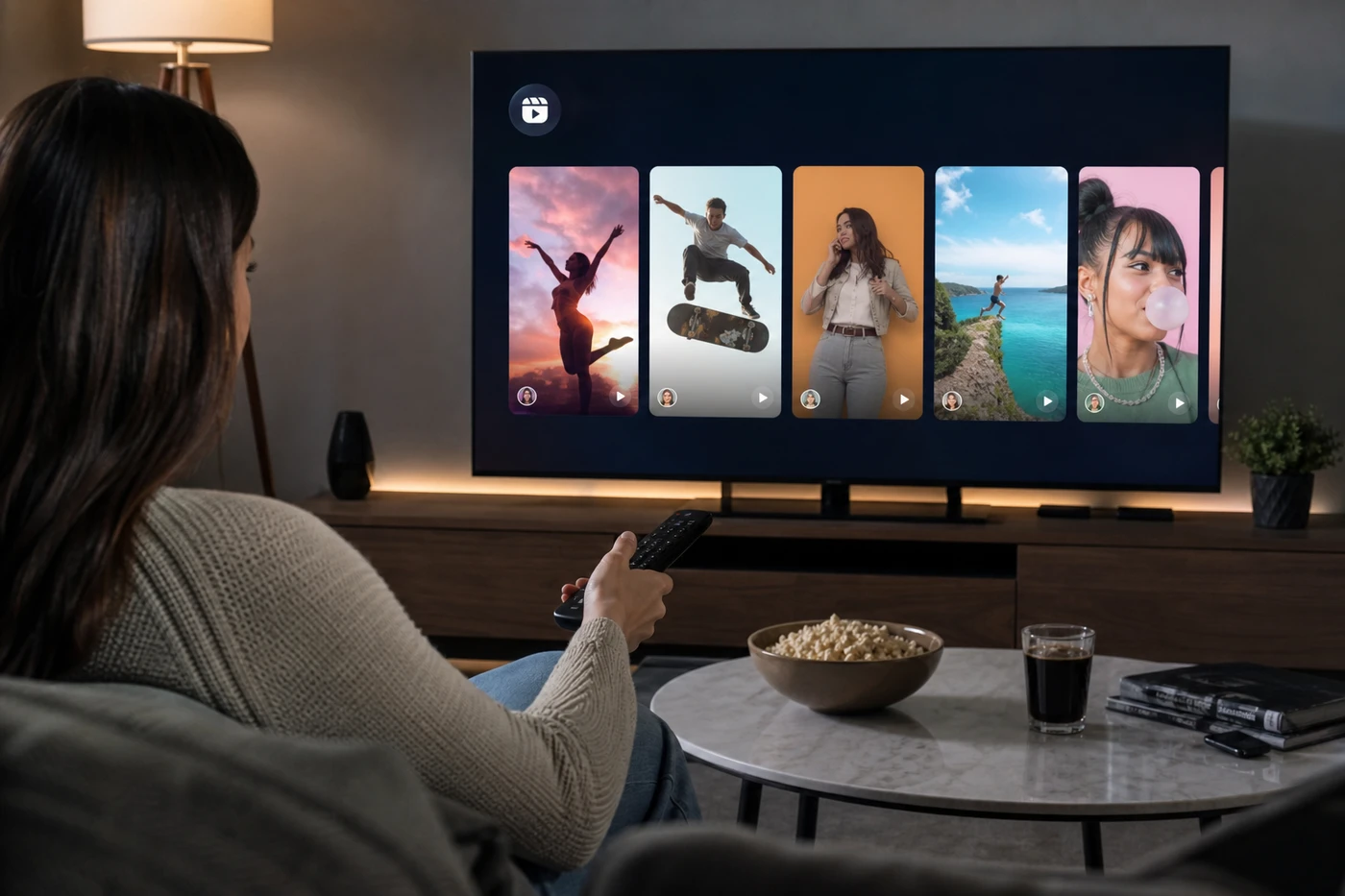
Meta is actively pushing its "Instagram for TV" app again, framing Reels as something you can put on in shared spaces - think hangouts, family rooms, even client sessions.
The promo campaign is built around creator-led scenarios (a nail tech playing Reels during an appointment, a cooking creator letting Reels run while he cooks, a fitness/lifestyle creator using stretching clips with his parents). The goal is simple: normalize "Reels on TV" as background entertainment and group viewing.
This isn't theoretical anymore. Instagram for TV first launched in the U.S. on Amazon Fire TV devices on December 16, 2025, then expanded to Google TV in February 2026, and later added Samsung Smart TVs in the U.S. (2020 models and newer). (about.fb.com1)
Meta has also been talking about "watch together" style features and content formats that behave more like TV - longer-form creator videos and episodic series. (about.fb.com2)
One more detail that matters: reporting suggests the TV app uses the same recommendation system as the main Instagram app, but gives extra weight to horizontal videos because they look less weird on a television. (theatlantic.com3)
Why creators should care
Attention is moving to TV screens. YouTube didn't "win TV" by accident. Nielsen's Media Distributor Gauge has shown YouTube hitting a platform-best 13.8% of U.S. TV watch-time in May (and staying at the top in multiple recent months). That's the benchmark Meta is chasing. (content.nielsen.com4)
Distribution changes when co-viewing shows up. People watch differently in groups. Fewer headphones. More side-eye. More "skip that" energy. Your pacing, your captions, your "is this awkward with my dad here?" factor - all of it suddenly matters.
Monetization follows the screen people brag about. The living room is where brand budgets historically get justified, even when the creative is basically the same. Meta wants into connected-TV ad dollars, and creators tend to become the bait: "Look, real people watch this stuff on the big screen." (Yes, that's the game.) (s21.q4cdn.com5)
Workflow gets annoying... then profitable. If Instagram starts rewarding horizontal or longer-form "TV-friendly" edits - even subtly - you'll feel it in performance. And you'll be forced into making two versions: the phone cut and the couch cut. Not glamorous. But it's leverage if you're early.
Hot take: "vertical vs. horizontal" is the wrong fight. The real fight is "solo dopamine scroll" vs. "shared-room attention." Different beasts.What to do next
-
Check your analytics for TV behavior - right now. Even before Instagram TV matters, YouTube already does, and many creators are shocked by how much viewing comes from TV screens once they finally look. If your audience is already leaning living-room, your editing rules change.
-
Start making one "big-screen-safe" cut per week. Same idea, different execution: fewer micro-jumpcuts, slightly longer holds, readable captions from across a room, less tiny on-screen text. You're not making cinema. You're making something that doesn't feel like a glitch on a television.
-
Test horizontal on purpose (not as a leftover). If the TV app is giving horizontal content a boost, you want at least a small library that benefits. Film a couple concepts where horizontal actually helps: tutorials, cooking, workouts, room tours, anything with spatial context. (theatlantic.com3)
-
Pitch "couch viewability" to sponsors. Not with fluff. With specifics: "This series is designed to work with sound on, captions readable, and it doesn't get weird when watched with other people." Brands understand living-room language. Use it.
Discussion
Join the discussion - share what's working for your channel.