
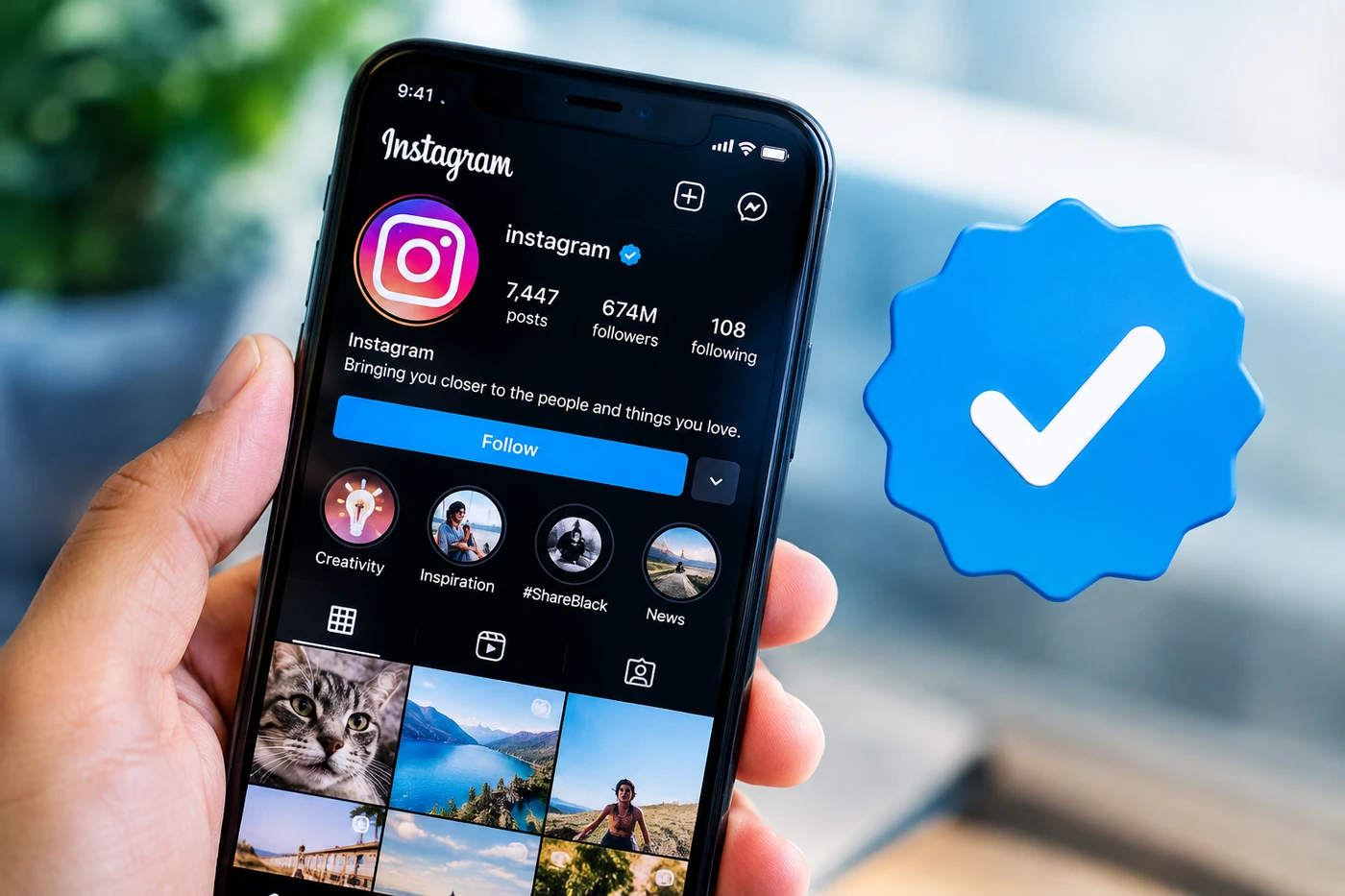
Instagram Verification Badge: What the Blue Check Really Means
Instagram verification badge rules now cover notable accounts and paying subscribers. Compare free and paid routes, assess impersonation protection, and decide whether verification solves a real business problem.
The blue check still looks important. What it means? That's become considerably messier.
Instagram now puts famous people, documented brands and paying subscribers behind essentially the same badge. Useful for spotting the real account. Useless for judging whether someone is influential, trustworthy or simply carrying a credit card.
Two doors, same badge
Instagram still offers free verification for notable creators, public figures and businesses. You need an authentic, complete and unique account, plus evidence that people are actually looking for you. There's no published follower minimum. Press coverage, search interest and a consistent public identity matter more.
Applications can take up to 30 days. If Instagram says no, its verification guidance1 says you can try again after another 30 days. Don't spam the form while waiting; multiple applications can cancel the active request. (facebook.com1)
The paid route changed again on September 15, 2026, when Meta introduced Meta One2. Its creator and business Essential plan starts at $14.99 monthly and includes verification, impersonation protection and profile tools. More expensive tiers add analytics, publishing features and team access. Pricing and availability can differ between accounts and regions. (about.fb.com2)
The badge verifies an identity. It doesn't verify talent. Harsh, perhaps. Also true.
Where creators get fooled
A checkmark is not an algorithm cheat code. Paying doesn't automatically make weak Reels travel further. Meta One does include tools such as stronger follow prompts and invitations for people who engage, but that's conversion plumbing - not guaranteed distribution.
The better argument is protection. Once your face, voice or clips start circulating, impersonators can clone your profile and scam your audience. A badge gives followers one clear reference point. Support access may also be valuable when an account problem threatens your income.
Just don't treat support as insurance. Creators have reported slow responses, repeated identity checks and unresolved cases even after subscribing. Complaints collected by TechCrunch3 show that paying can open the support door without guaranteeing somebody competent walks through it. (techcrunch.com3)
The wider market isn't exactly helping the badge retain its old magic. X ties blue checks to Premium subscriptions, while YouTube generally reserves channel verification for creators above 100,000 subscribers. Same symbol. Very different standards.
Your move
Apply for free verification first if you have genuine media coverage, interviews or strong search demand. Clean up your bio, profile photo, website and naming before submitting. Everything should tell the same story.
Pay only when you can name the business problem: impersonation, account recovery risk or tools you'll genuinely use. "Looking established" is not a business problem.
Finally, enable two-factor authentication and keep copies of your IDs, ownership documents and major press links. And ignore anyone selling insider verification. There is no secret Meta cousin. There is, however, an impressive supply of scammers.
- 1facebook.comverification guidance
- 2about.fb.comMeta One
- 3techcrunch.comTechCrunch
Discussion
Join the discussion - share what's working for your channel.