
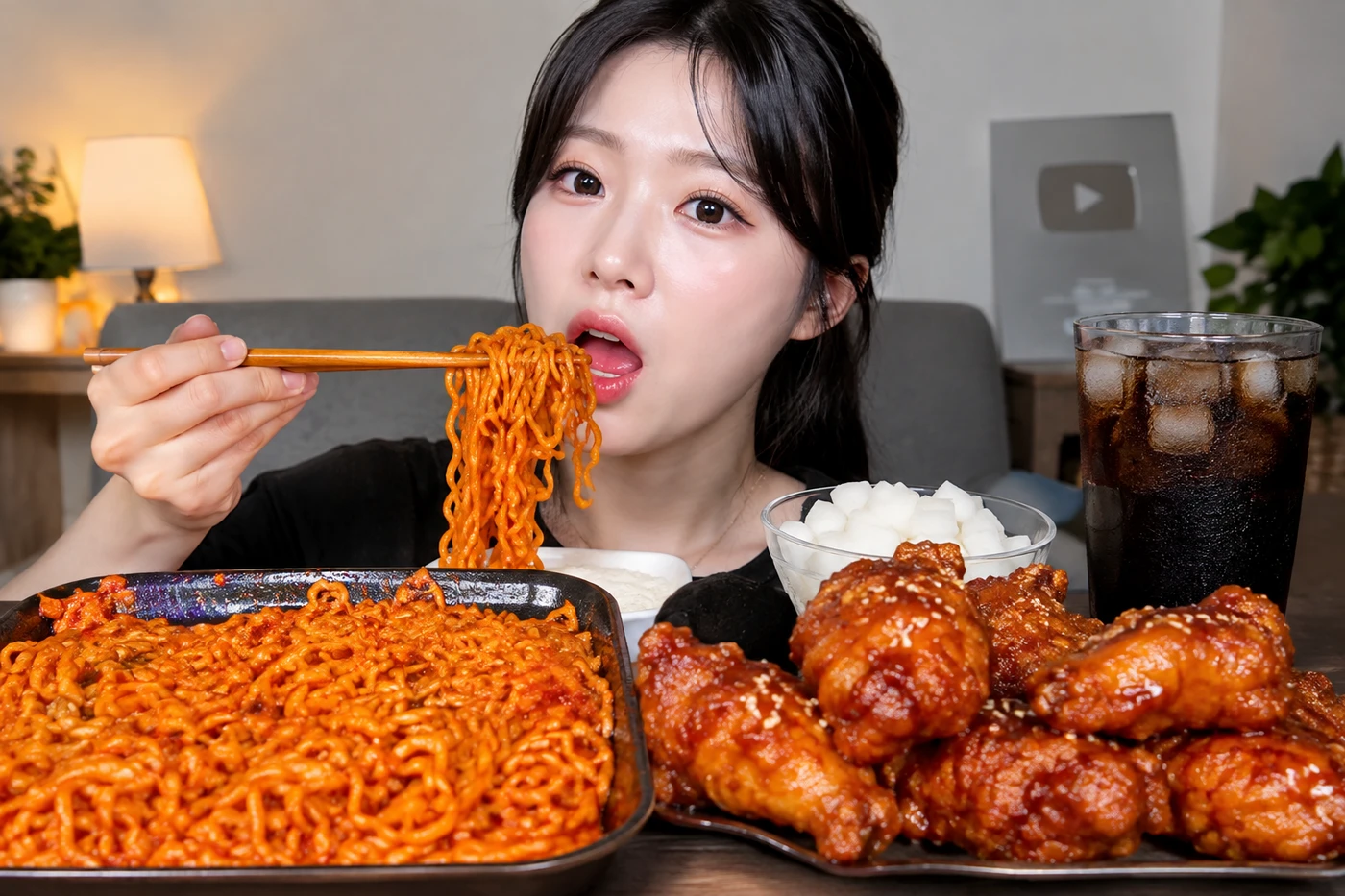
Mukbang Monetization Rules: Why Korean YouTube Creators Are Alert
Mukbang monetization rules are tightening as YouTube targets binge eating, extreme dieting and imitable behavior, putting Korean creators' archives, ad revenue and channel strategies under pressure.
A food video can stay online, pull views and still stop earning money. That's the uncomfortable bit creators need to understand.
YouTube hasn't banned mukbang. It's drawing a harder line around binge eating, extreme dieting and content that vulnerable viewers could copy. For some Korean creators, that line has already gone straight through the business.
The yellow icon gets teeth
Diet and food creator DietJo, with roughly 440,000 subscribers, said her channel's monetization had been suspended. She paused uploads while trying to work out what triggered the decision.
Miso took the chainsaw to her archive, deleting 339 of 667 videos after receiving policy notices and a temporary monetization suspension. Some older uploads included exact weight figures, dieting routines and weight-loss details.
The full creator reports are worth reading in The Korea Times1.
Tzuyang, one of the category's giants at around 13.5 million subscribers, has joked about eating more moderately. Important detail: there's no public evidence that her channel has been penalized simply for serving enormous portions.
This isn't a shiny new "no mukbang" rule. YouTube began expanding its eating-disorder policies in 2023, including restrictions on imitable behavior. Its advertiser guidelines2 now make clear that binge eating, severe calorie restriction, food hoarding and similar behavior may lose ads.
The format isn't the only target
YouTube's systems inspect more than the footage. Titles, thumbnails, descriptions and tags can all affect ad suitability. So "I ate dinner" and "10,000 CALORIE INSANE BINGE" may show similar plates while sending very different policy signals.
Creators love blaming the algorithm. Sometimes fair. But if your thumbnail screams medical emergency, don't act shocked when advertisers leave the room.The pressure is coming from outside YouTube too. A 2026 CCDH test3 found that one in nine recommendations shown to accounts posing as 13-year-old girls contained harmful eating-related material. That improved from one in three in its 2024 test. Still ugly.
Instagram has also tightened what teens can discover around eating disorders and repeated weight-focused content. This is becoming a platform pattern, not one moderation team having a strange week.
Protect the channel
Audit your back catalogue first. Search titles and descriptions for calorie counts, rapid weight-loss claims, "binge," "starve," extreme body comparisons and step-by-step diet routines.
Then fix the packaging. Don't make dangerous behavior the hook, especially in thumbnails. Context inside minute six won't rescue a title that already looks like encouragement.
For new videos, shift the spectacle toward food, culture, cooking, restaurants or conversation. You can keep the format's social magic without turning quantity into the entire plot.
And diversify the money. Ads are rented land. Sponsors, memberships, products and owned audience channels won't make policy risk disappear, but they stop one email from deleting your month.
- 1koreatimes.co.krThe Korea Times
- 2support.google.comadvertiser guidelines
- 3counterhate.comCCDH test
Discussion
Join the discussion - share what's working for your channel.