
AI Ad Suitability for Streamers: Twitch's New Monetization Risk
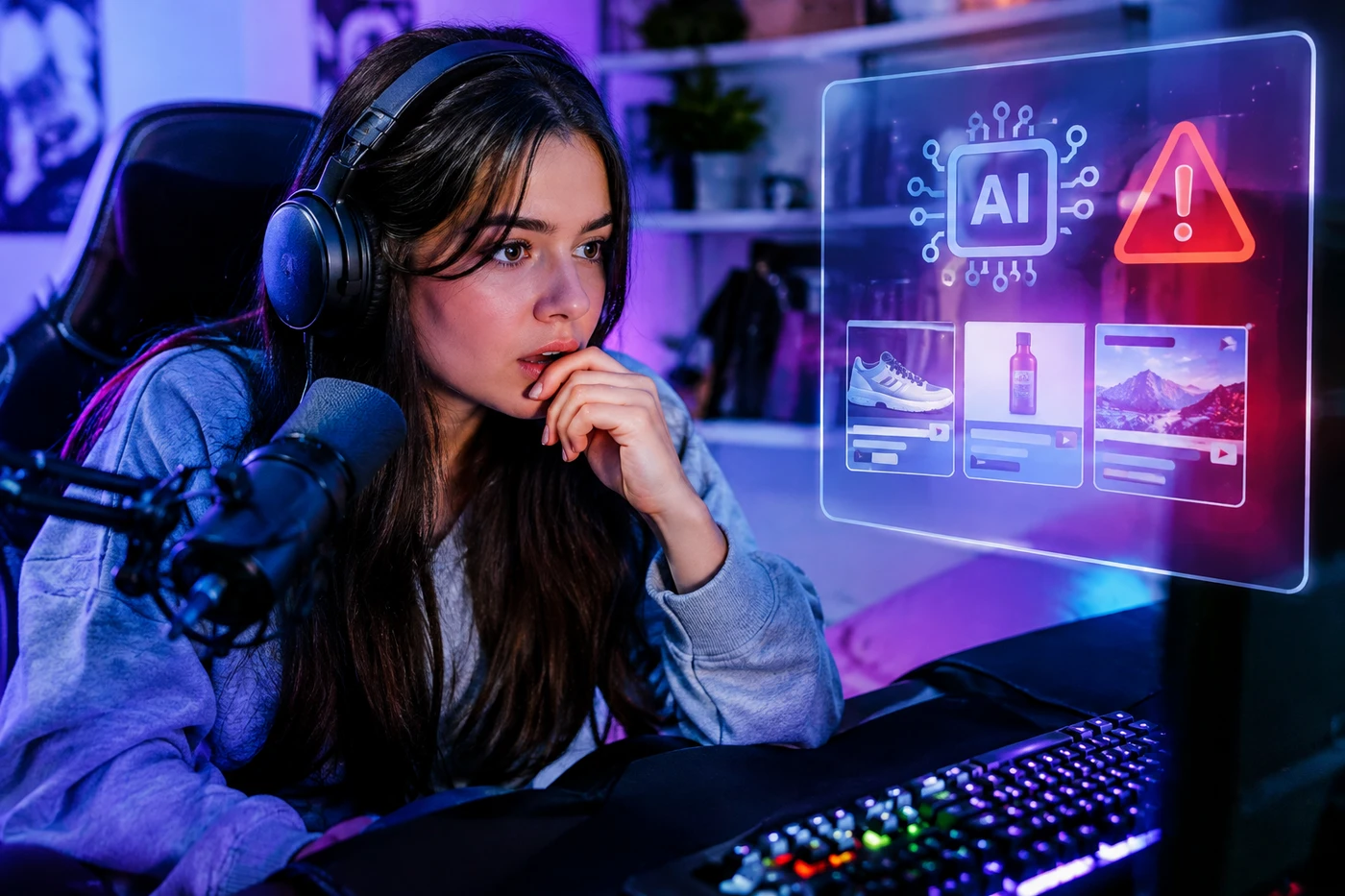
AI ad suitability for streamers is changing how Twitch evaluates live broadcasts for advertisers. This article explains why opaque moderation can reduce campaign access and how creators can protect revenue.
Your stream can follow every rule and still become awkward territory for advertisers.
That's the uncomfortable bit. Twitch isn't only checking what you label anymore. It's listening, transcribing and helping brands decide whether your channel fits their comfort zone.
The machine backstage
Twitch CEO Dan Clancy confirmed the system during a September 22 appearance on The Snarketing Podcast1. Twitch transcribes live broadcasts and uses AI to assess whether a streamer suits an advertiser's preferences.
This builds on Twitch's existing Content Classification Labels2. Creators already flag streams featuring persistent profanity, sexual themes, gambling, drugs, graphic violence, mature games or political discussion. Those labels help viewers know what they're entering and let brands avoid categories they dislike.
Now there's another layer. Your own label says what kind of stream you're running. Twitch's system forms its own opinion from what you actually say.
That doesn't necessarily mean one spicy joke kills monetization. It does mean fewer campaigns may qualify for your channel. Twitch hasn't publicly given creators a scorecard showing which words, topics or patterns affected an advertiser match. No useful little warning light. Just potentially less money.
The expensive uncertainty
Streamers including Steven Spohn, LuminusRed and Annie Krevice have raised the obvious problems: creators act differently during sponsored segments, automated systems regularly miss tone and sarcasm, and marginalized creators worry ordinary discussions about identity could be interpreted as "sensitive."
An algorithm doesn't need to ban you to hurt the business. It only needs to quietly make you less sellable.
Brand-safety automation isn't unique to Twitch. YouTube also uses automated ad-suitability checks. The important difference is visibility: YouTube tells creators when a video receives limited ads and offers human review under its advertiser-friendly guidelines3.
For live creators, context is nastier. A six-hour broadcast contains jokes, guests, chat reactions and accidental tangents. The rough edges are the product. Sand those away and you've built television with worse lighting.
Your move
First, label streams accurately. Don't panic-label everything, but don't give the machine an easy contradiction either.
Start tracking ad income alongside stream topics, tags and notable moments. Weekly screenshots will beat vague memories if revenue suddenly drops. You need a baseline before you can spot the bruise.
For paid activations, clearly mark the sponsored section and save the VOD. If a brand asks questions later, you'll have the actual segment rather than Twitch's invisible interpretation of it.
Finally, keep building income Twitch can't silently reroute: direct sponsors, memberships, merch and an email list. Ads are useful. Dependence isn't.
- 1music.amazon.comThe Snarketing Podcast
- 2help.twitch.tvContent Classification Labels
- 3support.google.comadvertiser-friendly guidelines
Discussion
Join the discussion - share what's working for your channel.