
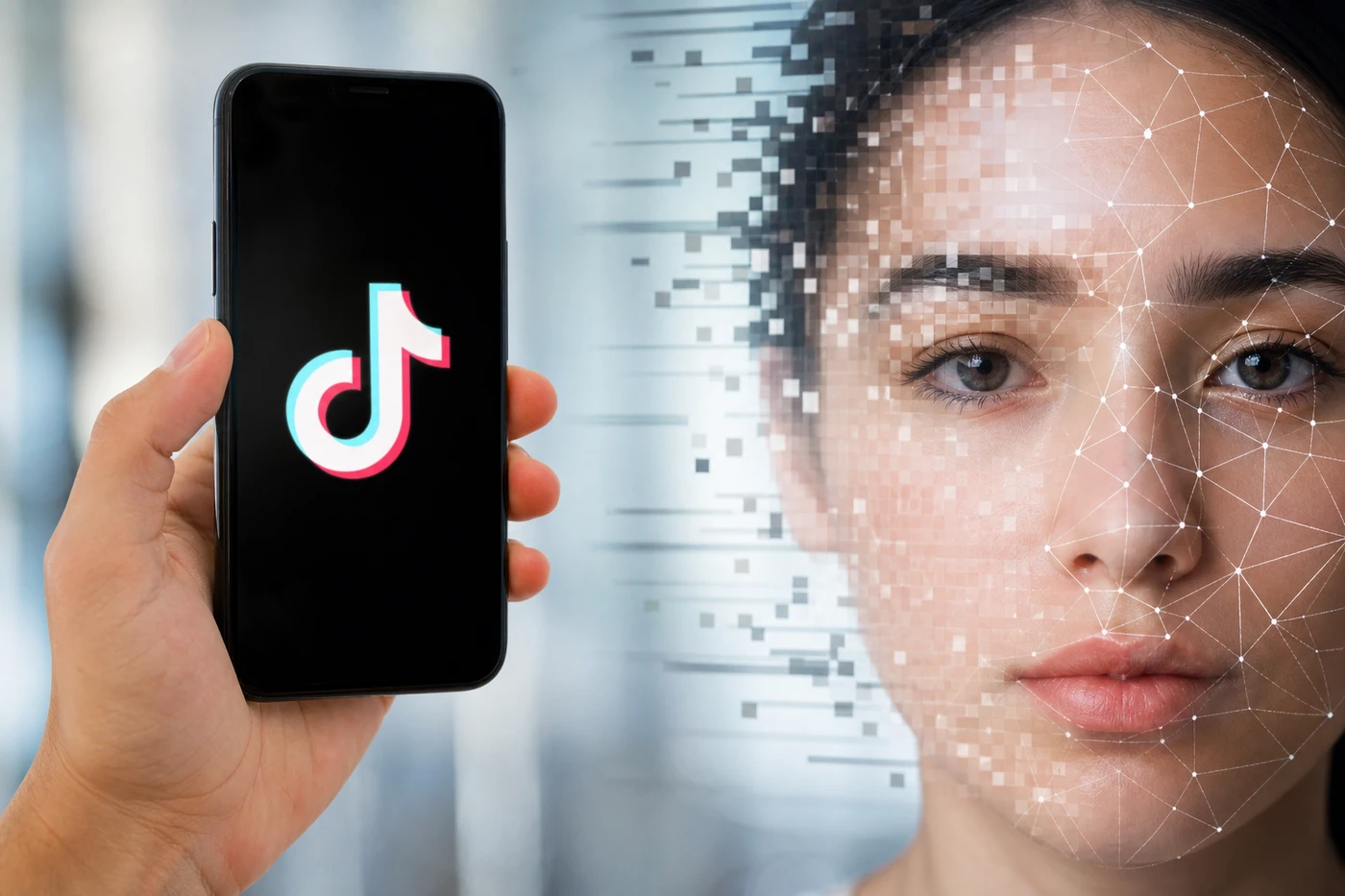
TikTok AI labels aren't enough: what changed and what to do
TikTok is expanding AI transparency beyond labels with AI literacy hubs, tougher spam detection, and C2PA support. Here's what it means for creators' reach, trust, and workflow.
If you've felt TikTok getting... weird lately, you're not imagining it. The feed's filling up with mass-produced "content" that looks like content until you actually watch it. Then it's just pixels doing cardio.
Now TikTok's trying a different tactic: not just labeling AI stuff, but educating viewers and hunting the accounts pumping it out. Which sounds noble. Also sounds like the beginning of stricter enforcement for anyone whose workflow even touches AI.
What happened
On July 10, 2026, TikTok rolled out a new set of AI transparency moves aimed at helping people recognize AI-generated content and cutting down on AI spam accounts. (newsroom.tiktok.com1)
There are a few concrete pieces here. TikTok says it's launching new educational resources (including an in-app learning hub that shows up when people search AI-related terms) and continuing "trusted expert" partnerships - specifically calling out NoFiltr and the Raspberry Pi Foundation. TikTok also says this expert program started in November 2025, has driven more than 200 million views, and they've committed over $4M so far. (newsroom.tiktok.com1)
Then there's enforcement. TikTok says it removed more than 86 million fake accounts in the first three months of 2026. And "in the coming weeks," it planned tests for upgraded detection systems targeting accounts dedicated to AI-generated spam - especially around politics/current events, financial advice, and medical content. (newsroom.tiktok.com1)
Finally, TikTok is leaning harder into provenance tech. It says it implemented C2PA Content Credentials two years ago (making it the first video platform to do so) and has now joined the C2PA Steering Committee. TikTok also claims it has labeled over 3 billion videos as AI-generated content using a mix of Content Credentials, creator tools, and invisible watermarking. (newsroom.tiktok.com1)
And yes, the "AI slop" context is real: Kapwing's June 2026 research said nearly 60% of TikToks shown to new accounts were "AI slop." (kapwing.com2)
Labels are the seatbelts. Spam accounts are the drunk drivers. TikTok's basically saying it needs both enforcement and education - or the crash keeps happening.Why creators should care
Attention: This is a distribution problem, not a philosophy debate. If low-effort AI spam keeps crowding the For You Page, original creators fight harder for the same seconds of attention. TikTok explicitly framed AI spam as something that "crowds out" authentic creators - which is platform-speak for "we know it's hurting the product." (newsroom.tiktok.com1)
Trust (and brand money): Research has been pretty consistent that simple "AI-generated" labeling doesn't magically change engagement behavior. One 2025 CHI paper found labels didn't significantly change likes/comments/shares, and a 2025 PNAS Nexus study reported the "AI-generated" label had - at most - small, statistically insignificant impacts on engagement intentions. Translation: people keep scrolling either way. (arxiv.org3)
But here's the part creators actually feel: labels can change interpretation. Viewers might not engage less, but they may trust you less, or assume your footage is fake, or start living in conspiracy-land about your process. (Fun.)
Workflow risk: TikTok's talking about invisible watermarking, Content Credentials, and improved detection. Great for fighting spam - also great for catching creators in the splash damage. False positives are already a thing creators complain about, and the more automated the detection gets, the more you need a clean, explainable pipeline. (reddit.com4)
Cross-platform reality: TikTok isn't alone. YouTube requires creators to disclose "altered or synthetic" realistic content, and YouTube has repeatedly said that a disclosure label by itself doesn't change recommendations or monetization eligibility. So we're heading toward a world where disclosure is normal, not optional - across platforms. (blog.youtube5)
What to do next
-
Audit your AI touchpoints. Not your "I used AI once" confession. Your actual pipeline: upscalers, voice tools, background generators, auto-editors, templates, anything that might stamp metadata or trigger platform detection. If you can't explain it, you can't defend it.
-
Decide your disclosure style before the platform decides for you. If you use AI in a meaningful way, label it and frame it in your own words (on-screen or caption). A platform label with no context makes viewers fill in the blanks. They are terrible at that.
-
Keep "high-trust topics" clean. TikTok specifically called out politics, finance, and medical content as areas where it's testing tougher spam detection. If you post in those lanes, avoid mass-production vibes, be precise, show sources, and don't dress guesses up like facts. (newsroom.tiktok.com1)
-
Build a human signature that AI slop can't fake in one prompt. Your face, your voice, your behind-the-scenes, your specific taste. The point isn't "never use AI." The point is "don't look replaceable."
-
Watch for the quiet penalty: reach friction. Even if TikTok says it's targeting spam accounts, enforcement often starts broad and tightens later. Track your post-by-post retention and saves/shares, not just views. If something dips right after you change tools, you've got your suspect list.
Discussion
Join the discussion - share what's working for your channel.