
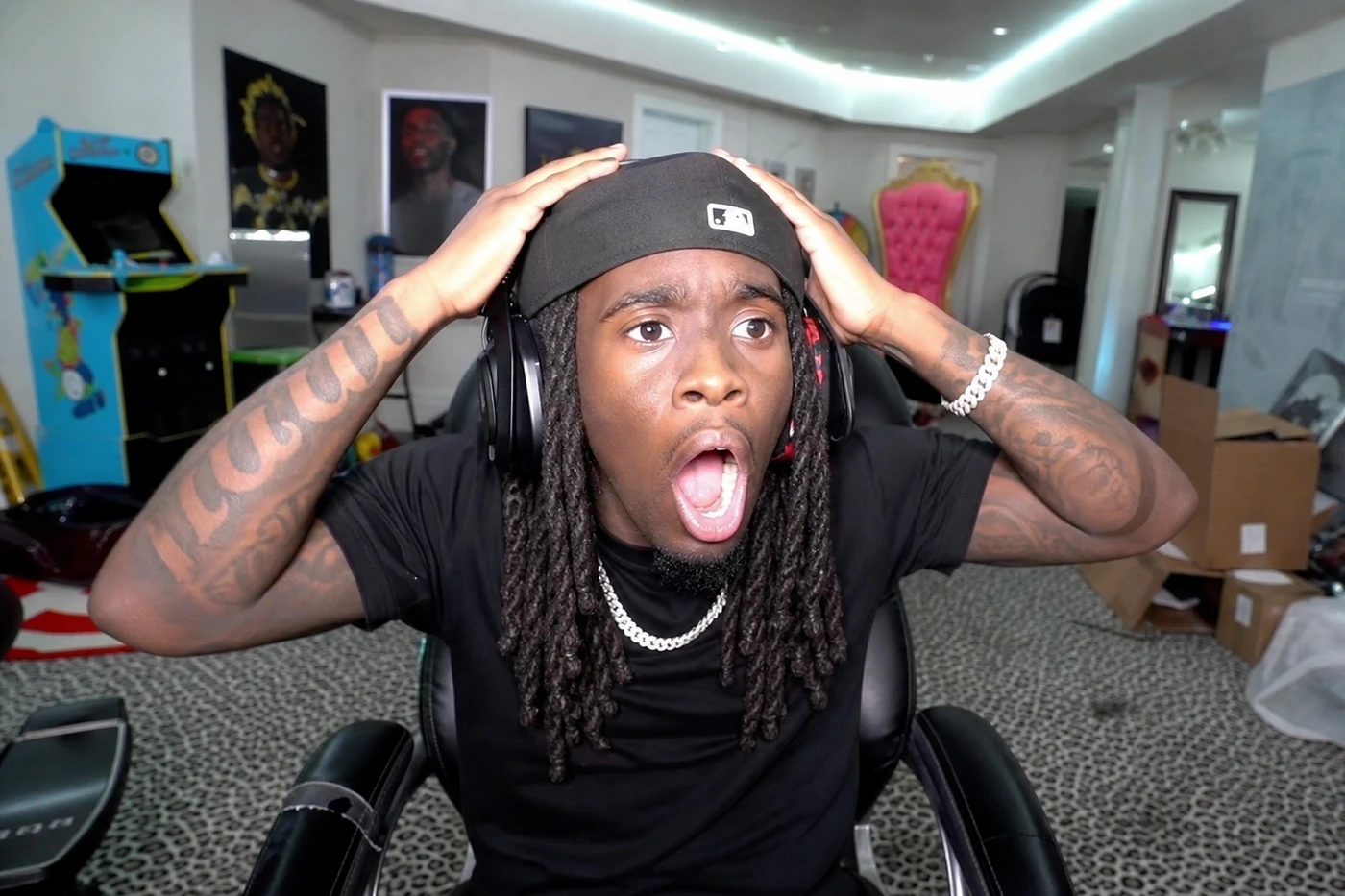
Kai Cenat comeback stream hits 1M+ viewers and resets live strategy
Kai Cenat's comeback stream topped 1M concurrent viewers across Twitch and YouTube. Here's what it signals about multistreaming, event-style live drops, and the workflow creators need to keep the momentum.
If you're still treating "going live" like a casual habit... cool. But you're playing last year's game.
Kai Cenat just walked back onto the internet on July 6, 2026 and pulled a million-plus people into a single moment across two platforms at once. Not a slow rebuild. Not a "hey guys, I'm back." An event. The kind that bends everyone else's schedule.
Creators don't lose to "better content." They lose to better distribution. This was distribution with a jet engine.What happened
Kai Cenat returned to livestreaming with a simultaneous broadcast on Twitch + YouTube, and the combined audience pushed past 1,000,000 concurrent viewers at peak.
Tracking reports put the peaks around ~711K on Twitch and ~404K on YouTube Live during the broadcast. The stream doubled as the big reveal for Streamer University 2026 - the roster/line-up announcement that turned the comeback into a "you had to be there" drop, not just another stream.
Context matters: this was his first major livestream in roughly nine months, after his marathon-style run (Mafiathon 3) wrapped in October 2025. He's hit seven figures before during those marathon events - this time, the headline was the two-platform play.
Why creators should care
1) Multistreaming is no longer a "small creator hack." It's a top-creator strategy. Twitch's current terms explicitly allow simulcasting, but with strings attached: you can't push people off Twitch via links, and you can't slap a merged cross-platform chat on screen like it's one big happy family. You've got to actually run two rooms without making Twitch feel like the neglected child.
2) The real product wasn't the stream. It was the moment. He didn't come back with "vibes." He came back with a headline: Streamer University 2026. That's attention engineering. A single narrative that other creators could co-stream, react to, and ride - basically turning the wider creator ecosystem into his distribution network for the night.
3) Monetization follows the crowd, but workflow decides if you keep it. Two platforms means two chats, two moderation surfaces, two sets of clips to publish, two algorithms to feed afterward. If you don't have a workflow, multistreaming just turns into "I was live" with extra CPU load.
Going live isn't the job. Turning the live moment into 30 days of downstream content is the job.What to do next
Plan your next "return" even if you never left. Pick one tentpole concept (announcement, collab, challenge, behind-the-scenes drop) and make the stream about that. Not "hanging out." Hanging out is fine - just don't expect headlines from it.
If you simulcast, do it clean. Treat Twitch and YouTube like two separate stages: platform-native CTAs, platform-native moderation, and no lazy "everyone go watch on the other link" behavior. You're trying to expand reach, not trigger platform headaches.
Recruit co-streamers on purpose. Don't just hope people react. Invite a handful of creators ahead of time, give them a reason (exclusive angle, early tease, a role), and let them amplify the moment while you stay the main channel.
Build the clip machine before you go live. Assign someone (or set up tooling) to timestamp, cut, title, and publish within hours. The stream is the spark. Shorts, VOD chapters, recaps, and posts are the firewood.
- Philipp (Web2Labs)
Discussion
Join the discussion - share what's working for your channel.