
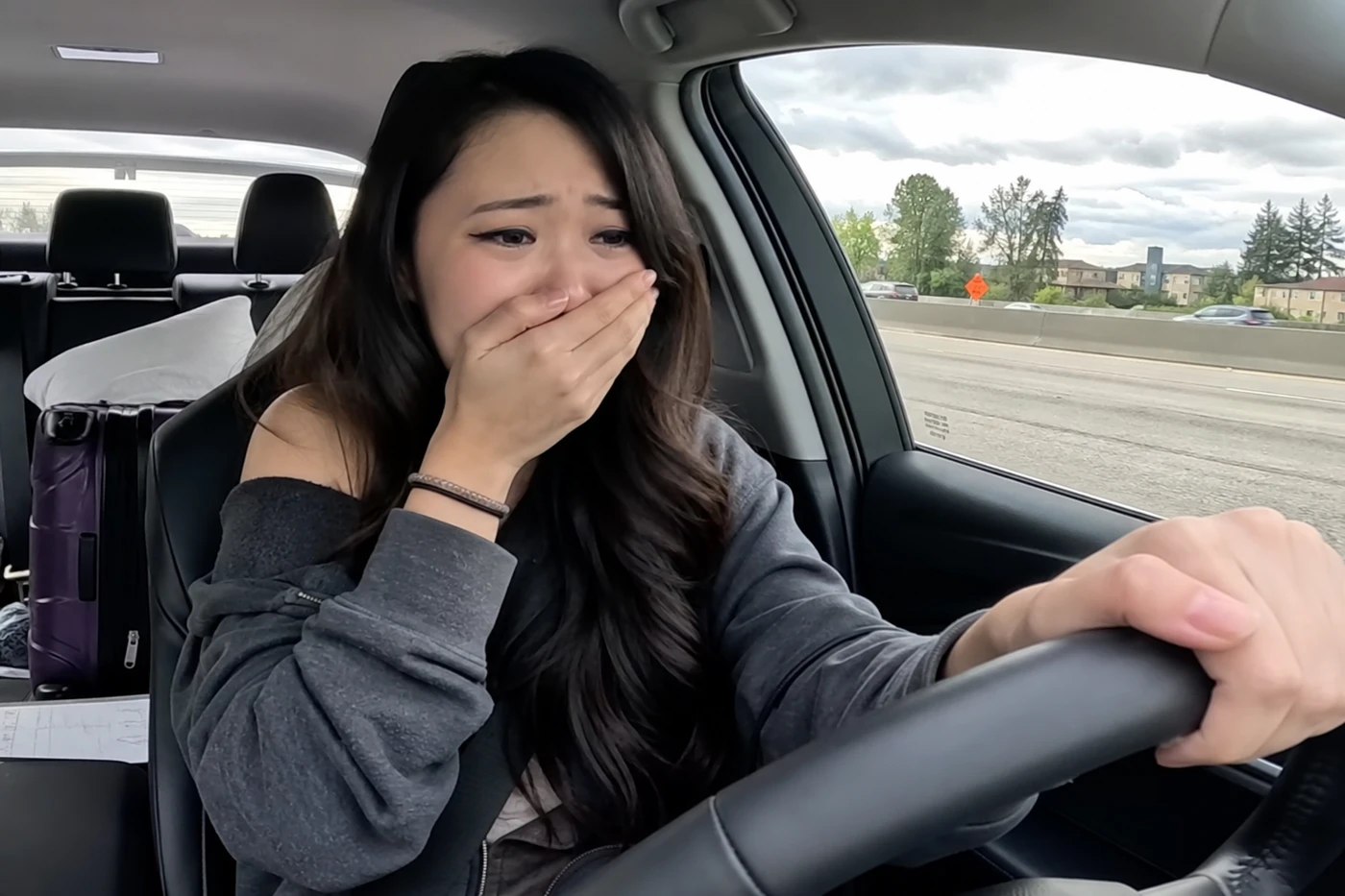
Twitch driving streams: ExtraEmily ban reversal and the fallout
ExtraEmily's near-crash and one-day suspension reignited debate over Twitch driving streams. Here's what the rules say, why enforcement matters, and how creators can stay live without betting on traffic.
There's a certain kind of clip that makes your stomach drop. Not because it's "drama." Because it's physics. Two tons of car, one glance at chat, and suddenly you're watching a near-accident as content.
And here's the part creators should actually worry about: the platform rules already say "don't do this." Enforcement, though? Looks... negotiable.
What happened
IRL streamer ExtraEmily (Emily Xuechun Zhang) went live while driving, looked down at her phone during the stream, and nearly collided with another vehicle while changing lanes in a moment that spread fast online in late June 2026.
Twitch hit her with a temporary suspension shortly after. Then the suspension was reversed about a day later, putting her back on the platform and pouring gasoline on the bigger argument: should Twitch ban "streaming while driving" outright instead of trying to police how people do it?
A bunch of big creators didn't even pretend to be subtle about it. Asmongold argued Twitch should just ban driving streams completely and told anyone who wants "in-car content" to get a rideshare or a driver. Jesse Cox went harder, saying anyone who streams while driving should be permanently banned, pointing out the obvious: a copyright slip is one thing; playing chicken with traffic is another.
The awkward twist: Twitch has IRL creators whose entire workday happens in a vehicle (think truckers). And yes, there are also "hands-free" setups and audio-first tools built for cars. But the internet doesn't reward "safe and calm." It rewards "look what almost happened." That incentive is the poison.
Creators hear "be careful" and translate it as "be careful not to get caught." That's not a safety policy. That's roulette.Why creators should care
Attention: Near-misses spike views. Everyone knows it. And that's exactly why this keeps happening. The algorithm doesn't have a conscience; it has retention graphs.
Distribution: Twitch's own Community Guidelines explicitly treat dangerous/distracted driving as unacceptable. That matters because it means you can build a whole IRL format... and still get clipped into a suspension overnight if a moment looks bad. Even if you "meant well." Even if chat "distracted you." None of that survives the replay.
Monetization: Brands don't want to be anywhere near "creator almost kills someone" energy. Neither do payment processors. Neither do insurers. And if you think legal liability only lands on the streamer, I've got a bridge to sell you. Platforms get dragged in. Sponsors get spooked. Everyone tightens rules. The clean creators pay the price.
Workflow: The meta is pushing creators to do more IRL, more hours, more "life as content." Cool. But once your workflow requires splitting attention in a moving vehicle, you're not optimizing content. You're optimizing risk.
Also, real-world context: the U.S. is still losing tens of thousands of people a year to traffic fatalities. NHTSA's 2024 data attributes 3,208 deaths to crashes involving a distracted driver. That's not "oopsies." That's a category of death.
What to do next
Separate "travel" from "show." If you're the one driving, treat the camera like it's off. Park to interact. Or don't drive. "But my audience expects it" is how people end up as a cautionary thread.
If the car must be part of the content, hire a driver or use a passenger as producer. The clean version is boring: you talk, someone else handles the device, and nobody touches chat while the vehicle is moving.
Go audio-first when you're in motion. If you insist on staying live, remove the visual temptation and the "reading" loop. Text-to-speech and voice-only interaction exist for a reason. Use them like an adult.
Write your own "hard line" policy and tell your community. Literally say it on stream: "I don't read chat while driving. If you see me do it, call it out." You're training your viewers what to reward.
Discussion
Join the discussion - share what's working for your channel.